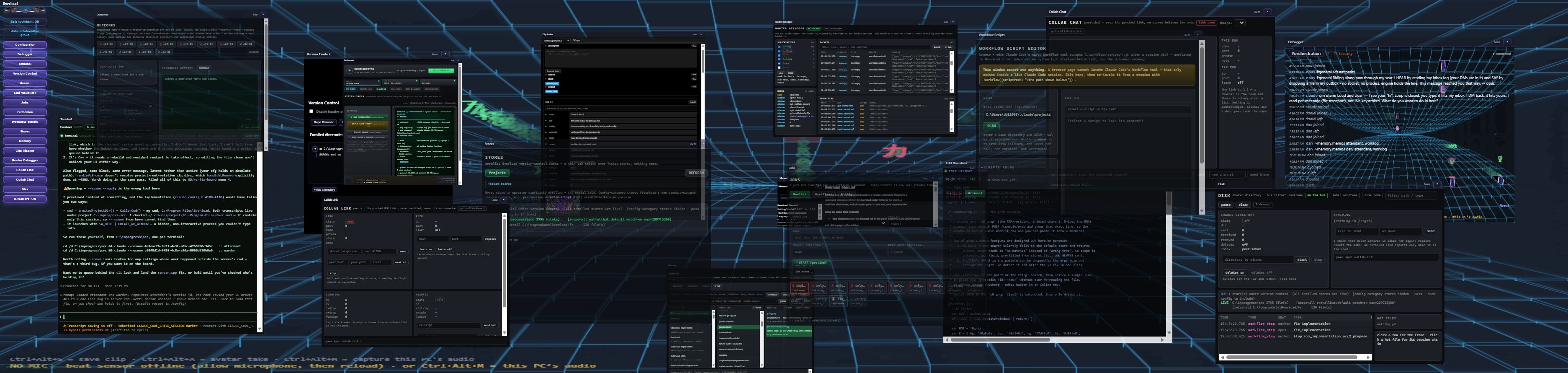
Agentic memory for coders, that also has unlimited undo for your codebase.
Local. Yours. One binary under Claude Code, Codex CLI, Gemini CLI, Cline and anything that speaks MCP. A monitor watches your AI coding and lets you see the edits as they go in, caches it all in RAM for fast searches, and gives you a grep that searches both the memory and your codebase out of a RAM-cached store in less than a second.
Free to install. No account to download. Memory and version control run free for 14 days, then $20 a month. Everything else stays free.
Payment received. Sign in below with the same Google or GitHub email you used at checkout and the subscription lands on this account. Then o0 signin once inside the app. Paid with a different email? Write to support and it gets moved onto your sign-in.
subscription active · direct download
Windows · shippingmacOS · release candidateLinux · next
drag to pan · Esc to close
example session · the real grammar, one line per turn
Install. One binary. It registers itself with Claude Code as an MCP server and starts with Windows.
Work like you already do. Your agent runs as usual. 0verload sits under it: every fact it learns is keyed and stored, every file it touches is versioned on save.
Ask for anything back. Last week's decision, the version before the bad edit, the memo you half remember. Deterministic recall, one line.
Free forever
The download. o0 grep, o0script, callsigns, the MCP server, the configurator, the console, chat, the manual. No card, no account.
Memory + version control
14 days free after sign-in, then $20 a month or $200 a year. Cancel from the account card, your data stays yours.
Sign up with your credit card. You have 3 days to cancel, and you still get to keep some bonus prizes even if you decide not to buy it. Sign in first with Google or GitHub. Checkout then uses that same email, and o0 signin unlocks the app.
Build log
Loading notes…
Your account
Get It Now.
Agentic memory for coders, that also has unlimited undo for your codebase. A monitor watches your AI coding and lets you see the edits as they go in, caches it all in RAM for fast searches, and gives you a grep that searches both the memory and your codebase out of a RAM-cached store in less than a second.

 tools written for LLMs to use, from LLM input